
Drawing exercises
A 15-Minute Daily Drawing Practice Routine for Beginners
By Drawcil Editorial · · 5 min read · Updated
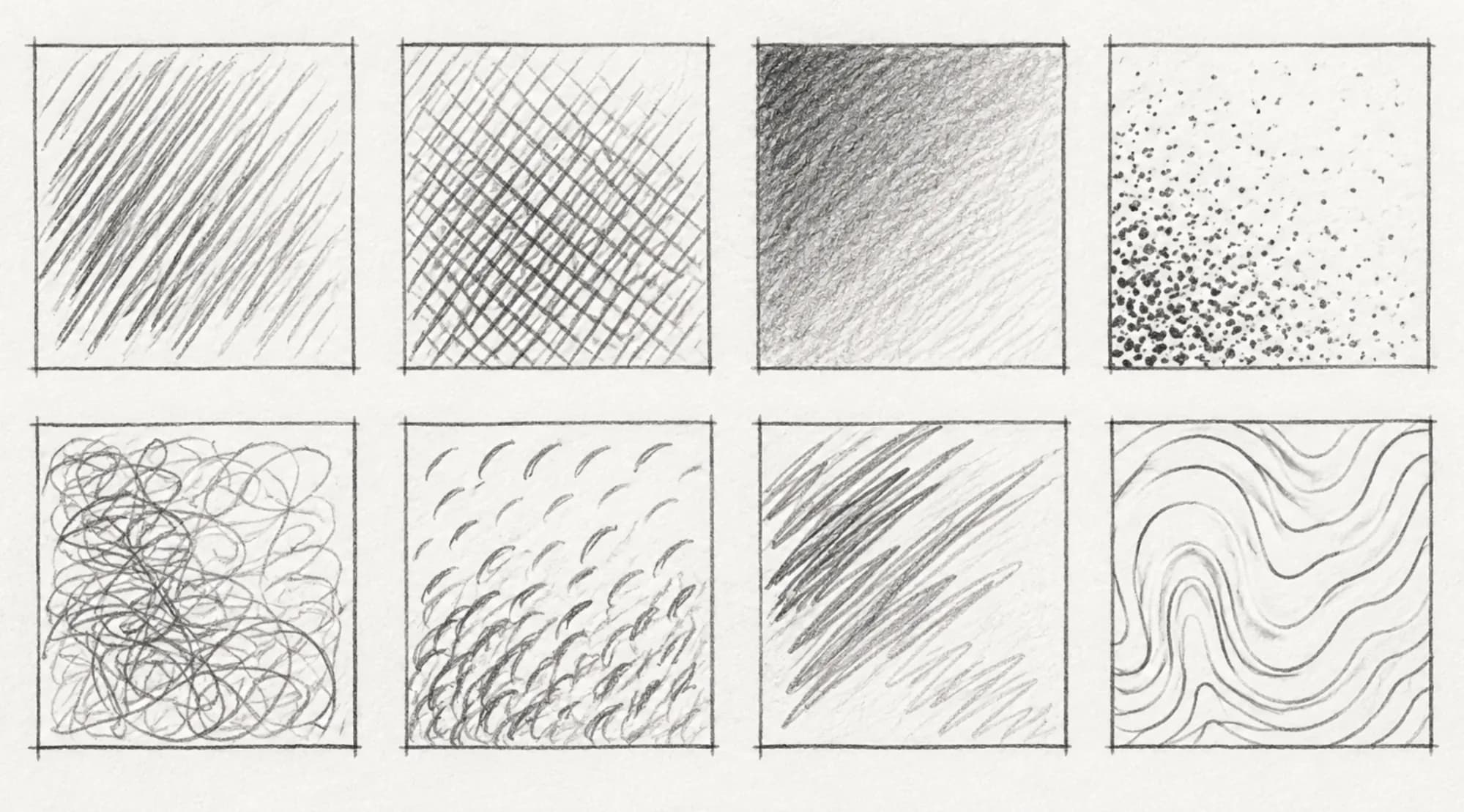
Daily drawing practice exercises
A simple 15-minute daily drawing routine with a weekly plan, a four-week progression and habit tips, so you can improve steadily without needing hours.
The single biggest factor in learning to draw isn't talent, expensive supplies or a perfect course. It's showing up regularly. A small amount of practice every day beats a long session once in a while, because your hand and eye improve through repetition, and skills fade if you leave long gaps.
The problem is that "practise every day" is vague advice. What should you actually do for those minutes? This guide gives you a complete 15-minute routine, a weekly plan that keeps things varied, and the habit tips that make it stick.
Why 15 minutes is enough
Fifteen minutes is short enough that you'll actually do it, even on busy days, and long enough to cover the essentials: a warm-up, some focused practice and a short drawing. Many people find that once they sit down for 15 minutes, they carry on for longer. But the routine works even if you stop at 15.
The benefits of daily practice:
- Faster progress. Frequent short sessions build skills more efficiently than rare long ones.
- Less pressure. A small commitment is easy to keep.
- A real habit. After a few weeks, drawing becomes part of your day.
- Visible results. Daily pages give you a record of your improvement.
What you'll need
- A pencil (HB or 2B) and a kneaded eraser
- A sketchbook or a stack of paper
- A timer
- A few reference photos (a folder on your phone is fine)
If you're still gathering supplies, our guide to drawing supplies for beginners lists a simple starter kit.
The 15-minute routine
Every session follows the same three-part structure:
Part 1: Warm up (3 minutes)
Start with loose, easy marks to get your hand moving:
- Draw a page of straight lines between pairs of dots
- Add a row of circles and ovals
- Make a quick value strip from light to dark
Don't worry about quality. The goal is to get your arm moving and your mind focused. For more options, see our guide to warm-up exercises before every session.
Part 2: Focus skill (7 minutes)
Pick one skill to work on, using the weekly plan below. Spend the full seven minutes on it, drawing as many examples as you can.
Part 3: Short drawing and review (5 minutes)
Draw something simple from a photo or real life. In the final minute, look at your page and note one thing that went well and one thing to try next time. Write them in the corner of the page if you like.
A weekly plan: what to practise each day
Rotating your focus keeps practice interesting and covers all the core skills. Here's a simple pattern:
| Day | Focus skill | What to do (7 minutes) |
|---|---|---|
| Monday | Lines and shapes | Superimposed lines, ghosted lines, circles and ellipses |
| Tuesday | Form | Boxes, cylinders and spheres from different angles |
| Wednesday | Gesture | Ten 30-second gesture sketches from photos |
| Thursday | Value | A value scale, then a shaded sphere or cylinder |
| Friday | Observation | One contour drawing of an everyday object |
| Saturday | Free draw | Anything you enjoy, from a photo or from life |
| Sunday | Review or rest | Look back through the week's pages, or take the day off |
A four-week progression
If you'd like more structure, build up gradually:
- Week 1: Build the habit. Don't worry about the focus skill. Just draw for 15 minutes each day, using the routine above.
- Week 2: Add accuracy. In your short drawings, practise checking proportions by holding your pencil up and comparing sizes.
- Week 3: Add shading. Spend your short drawing on a simple object with one light source and a cast shadow.
- Week 4: Add a challenge. Choose a slightly harder subject, such as a pumpkin, a mug or a face, and work through it in stages.
At the end of the month, redraw something you drew in week 1 and compare. That comparison is the best motivation you'll get.
Ten-minute and five-minute versions
Some days you won't have 15 minutes. A shorter routine is far better than none:
- 10 minutes: 2 minutes of warm-up, 5 minutes of focus, 3 minutes of drawing.
- 5 minutes: 1 minute of warm-up lines, then one quick sketch of whatever is nearby.
- 2 minutes: One contour drawing of your hand or a nearby object. Sometimes this is all it takes to keep the streak alive.
Habit tips that actually work
- Pick a fixed time. Link drawing to something you already do, such as after your morning coffee or before bed.
- Keep supplies visible. Leave your sketchbook and pencil on your desk, not in a drawer.
- Lower the bar. Tell yourself you only have to draw for two minutes. Most days you'll carry on.
- Track your streak. Mark each day on a calendar. Seeing a chain of ticks is surprisingly motivating.
- Date every page. It lets you see progress over time.
- Don't skip twice. Missing a day is fine; missing two in a row starts a new habit of not drawing.
- Draw what you like, too. Mix serious practice with subjects you enjoy.
What to draw when you don't know what to draw
Staring at a blank page is one of the biggest obstacles to daily practice. Keep a list on your phone and pick from it:
- Objects on your desk: a mug, a pen, your keys
- Fruit and vegetables
- Your shoes, hands or a pet
- A pumpkin, a leaf or a flower
- A photo from your camera roll
If you'd like a ready-made starting point, upload a photo to Drawcil and follow its four pencil stages, from rough outline to finished drawing, as your "short drawing" for the day.
How to measure your progress
Improvement is slow day to day, but clear over weeks. To see it:
- Keep every page, including the bad ones.
- Redraw the same subject each month and compare.
- Take a photo of your best page every week.
- Note small wins, such as steadier lines, a better cast shadow or a more accurate proportion.
Common mistakes
- Doing too much at the start. A routine that's too ambitious is one you'll abandon. Start small.
- Only drawing what you're already good at. Include the skills that feel hard.
- Erasing everything. Keep your lines. They show how you're thinking.
- Judging each drawing harshly. The goal is practice, not a masterpiece.
- Waiting for motivation. Habit, not motivation, does the work.
- Never learning from others. Alongside your routine, follow a structured course for a few lessons a week. The free Drawabox lessons are built around daily warm-ups, and Proko has free lessons on shading, gesture and portraits.
Frequently asked questions
How long should I practise drawing each day? Fifteen minutes is a good start. Thirty to sixty minutes is great if you can manage it, but consistency matters more than length.
Is it better to practise every day or a few times a week? Daily short sessions are usually most effective, but three or four times a week is still very good. Choose what you can sustain.
What should I draw every day? A mix of warm-up exercises, one focus skill and a short drawing from reference. Rotate the focus skill through the week.
How long until I see progress? Most people notice steadier lines and better proportions after two to four weeks of regular practice.
What if I miss a day? Just start again the next day. Don't try to "catch up" by doing double.
Start tonight
Set a timer for 15 minutes. Spend 3 on lines and circles, 7 on one skill from the weekly plan, and 5 on a simple drawing. Write down one thing you learned, and put your sketchbook where you'll see it tomorrow.
Then do it again. In a month, you'll have around 30 pages of practice and a noticeably steadier hand.
When you want a guided project for your daily drawing, Drawcil can turn any photo into a step-by-step pencil lesson.
Put this into practice
See how Drawcil’s AI drawing feedback works. After a Drawcil lesson, share a photo of your attempt for AI suggestions on shapes, proportions, placement and values.